
Surfaces That Handle Decades of Traffic
Driveways in Cameron for new construction, rural property access, and replacement of deteriorating surfaces
Driveways that crack within a few seasons or develop ruts under vehicle weight typically fail because the base wasn't prepared correctly—either the subgrade wasn't compacted, drainage wasn't accounted for, or unsuitable material was used as fill. Sandhills Land Solutions installs driveways for residential and rural properties across Cameron and Moore County, preparing and grading the base to prevent shifting, erosion, and water intrusion that causes surface failure. The work addresses properties where accessibility, drainage, or structural durability currently limits use or where new construction requires a functional entry surface.
Driveway installation involves excavating to remove unstable topsoil, placing and compacting aggregate base material in layers, grading to promote water runoff away from structures, and finishing with gravel, asphalt, or concrete depending on property needs and budget. Base thickness and material type vary depending on soil stability, traffic load, and whether the driveway serves light passenger vehicles or heavier equipment common on rural properties.
Arrange an on-site consultation to review drainage conditions and recommend a driveway design suited to your property layout.
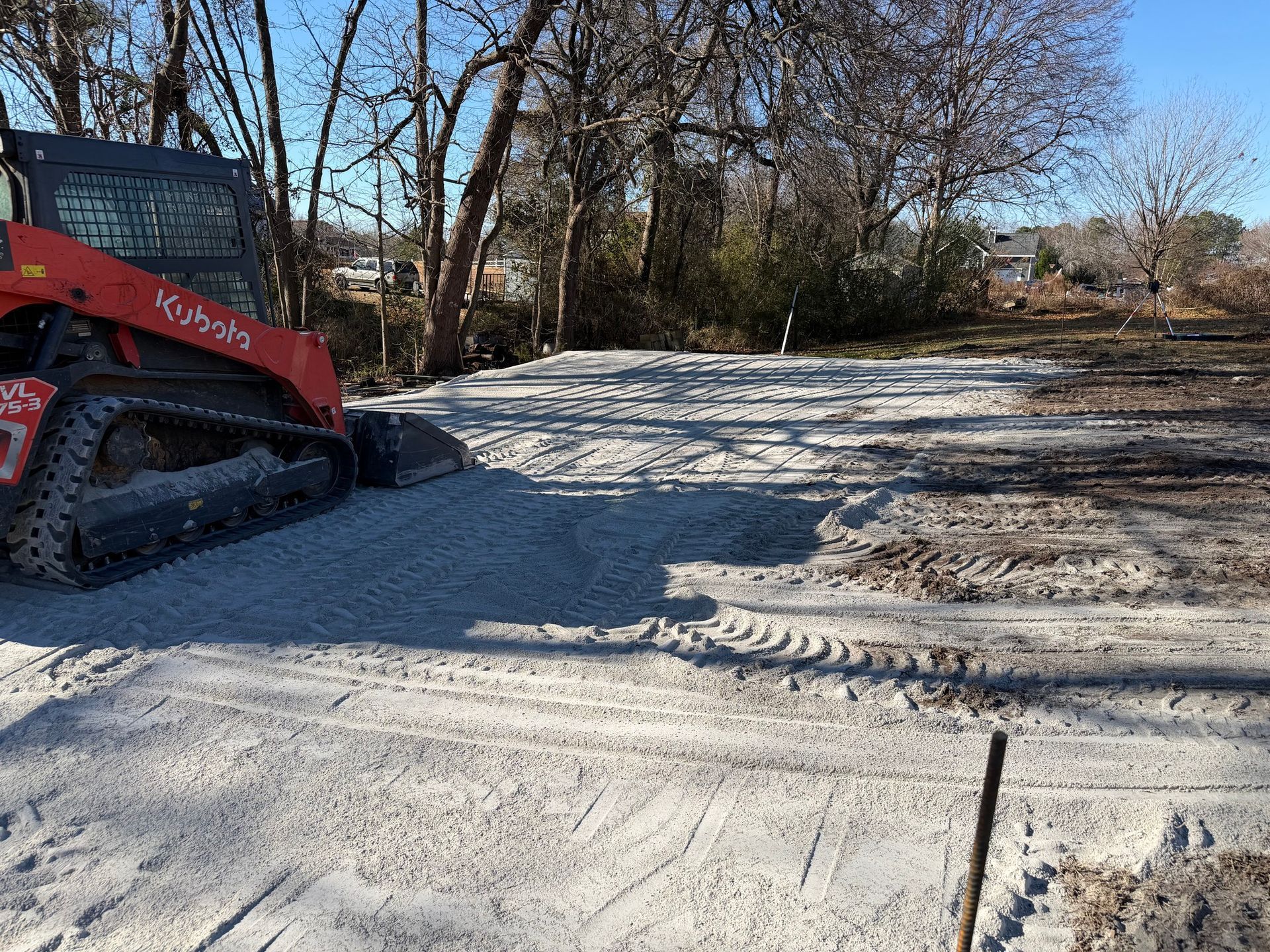
How Base Preparation Addresses Long-Term Settling
Base preparation begins with excavating to a depth that allows for adequate aggregate layers—typically eight to twelve inches depending on soil type and expected vehicle weight. Operators place crushed stone or gravel in lifts, compacting each layer before adding the next to eliminate voids that cause settling. Grading establishes a crown or cross-slope so water sheds toward edges rather than pooling on the surface, and culverts or drainage swales are integrated where water crosses the driveway path.
Once the base is compacted and the surface layer is applied, you notice a firm, stable surface that doesn't flex or shift under vehicle weight, water runs off to designated drainage areas without cutting channels through the material, and edges hold their shape instead of crumbling or slumping during wet conditions. Properly compacted driveways resist rutting under repeated traffic because the base distributes loads evenly, and surface material stays bonded rather than separating into loose aggregate.
Driveway installation includes excavation, base preparation, grading, and placement of the surface material, though it does not include ongoing maintenance, seal coating for asphalt surfaces, or landscaping along driveway edges. Material selection depends on budget, aesthetic preferences, and whether the driveway will handle standard residential traffic or heavier commercial or farm equipment.
Common Questions About This Service
Homeowners planning driveway projects in Cameron and nearby areas often ask about materials, drainage integration, and how site conditions affect installation.
What material works best for rural driveways?
Gravel driveways offer durability and drainage at lower cost, making them suitable for rural properties with longer access roads, while asphalt or concrete provides smoother surfaces better suited to residential neighborhoods with shorter driveways and frequent foot traffic.
How does base thickness affect driveway lifespan?
Thicker aggregate bases distribute vehicle weight more effectively and resist compression, which prevents surface cracking and rutting—standard residential driveways typically use eight inches of compacted base, while driveways supporting heavier equipment may require twelve inches or more.
What causes driveways to wash out during heavy rain?
Driveways without proper cross-slope or edge containment allow water to flow along the surface instead of shedding to sides, which erodes material and creates channels—adequate grading and drainage structures prevent this.
When is the best time to install a driveway in Cameron?
Installation works best during dry periods when soil moisture is low and compaction equipment can achieve proper density, typically late spring through early fall when ground conditions are stable.
What site conditions increase installation complexity?
Steep grades, high water tables, expansive clay soils, and limited access for equipment delivery require additional base preparation, drainage structures, or material adjustments to maintain long-term stability.
Sandhills Land Solutions provides free estimates with straightforward recommendations based on your property's soil conditions, drainage patterns, and intended use. Contact the office to schedule a site visit and discuss material options.