
Properties Made Ready for Intended Use
Land Clearing in Cameron for residential construction, commercial development, and property improvement projects
Land clearing involves removing trees, brush, stumps, and overgrowth to prepare properties for construction, farming, or landscaping. Sandhills Land Solutions clears residential and commercial sites across Cameron and surrounding Moore County communities, using professional equipment to remove vegetation efficiently while minimizing ground disturbance and debris left behind. The service addresses properties where overgrowth limits visibility, access, or usability, and where construction timelines require cleared land before site preparation or grading begins.
Operators use tracked equipment to cut, remove, and process vegetation, pulling stumps to below-grade depth or grinding them depending on what the site will be used for. Brush and smaller material are mulched on-site or hauled away, and larger timber may be processed for removal or left stacked if the property owner plans to use it. The approach varies depending on whether the project requires selective clearing to preserve certain trees or complete removal for building pads and access roads.
Request a property assessment to identify clearing requirements and discuss debris handling based on your project scope.
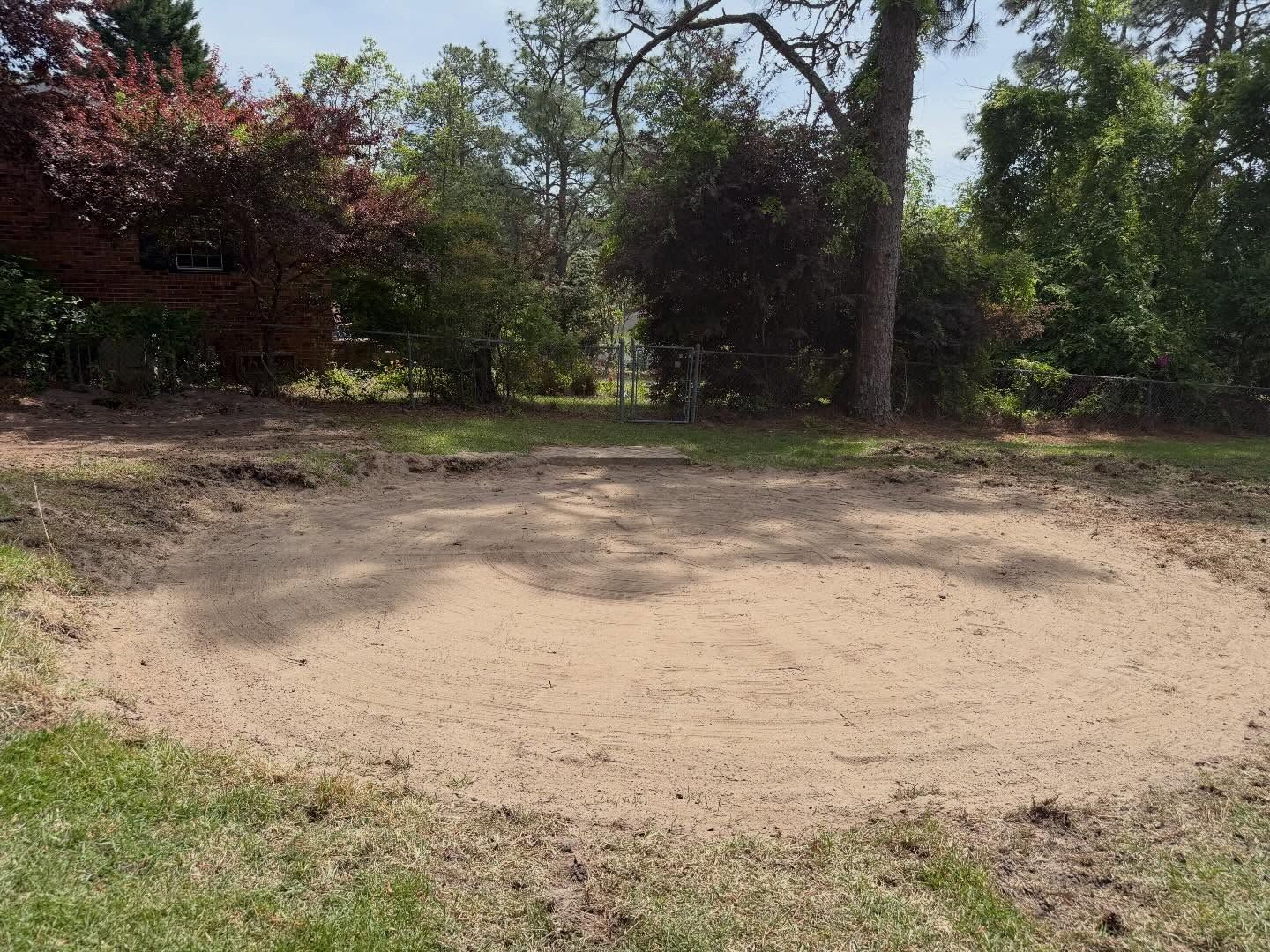
What You Notice Once Clearing Is Finished
Clearing begins with marking property boundaries, utility easements, and any vegetation designated for preservation. Equipment removes standing trees, cuts brush and undergrowth at ground level, and extracts stumps using hydraulic force or grinding them to a depth that won't interfere with grading or construction. Debris is processed into mulch, loaded for offsite disposal, or organized into burn piles if local regulations and site conditions allow controlled burning.
After clearing completes, you see unobstructed sightlines across the property, ground surface visible and accessible for surveying or equipment operation, and stumps removed or ground flush so they won't obstruct mowing, grading, or foundation work. Safety improves because dead trees, leaning trunks, and dense undergrowth that could harbor pests or create fire hazards are gone, and the property becomes functional for its intended purpose without vegetation interference.
Land clearing prepares the site for the next phase of work but does not include final grading, topsoil placement, or erosion control measures such as seeding or silt fencing. Properties with protected species, wetland boundaries, or heritage trees may require permits or modified clearing plans to comply with local regulations.
What Property Owners Usually Ask
Property owners planning land clearing projects in Cameron often ask about debris removal, equipment impact, and how clearing integrates with construction schedules.
What happens to trees and brush after removal?
Smaller material is mulched and spread on-site or hauled away, larger logs may be processed for firewood or timber if desired, and stumps are either extracted and removed or ground below grade depending on future land use.
How deep are stumps ground during clearing?
Stump grinding typically reaches six to twelve inches below grade, which prevents interference with grading equipment and allows topsoil placement, though deeper grinding may be needed if the site will support structures or paved surfaces.
What site conditions affect clearing timelines in Cameron?
Wet soil, dense hardwood growth, steep slopes, and limited equipment access extend clearing timelines, while properties with sandy Sandhills soil and open pine stands clear faster due to better traction and easier tree removal.
When should land clearing occur relative to construction?
Clearing happens before site preparation and grading, ideally during drier months when equipment can operate without excessive ground disturbance, and timed so debris removal doesn't delay subsequent construction phases.
What equipment is used for different types of vegetation?
Forestry mulchers handle dense brush and small trees efficiently, excavators with grapples remove larger trees and stumps, and bulldozers push material into piles for processing or removal depending on vegetation density and site access.
Sandhills Land Solutions coordinates clearing timelines with project schedules and provides thorough cleanup after completion. Schedule a consultation to review your property and receive a detailed clearing estimate.