
Construction-Ready Land from Start to Build
Site Preparation in Cameron for residential construction, commercial builds, and development projects requiring fully prepared ground
Moore County's sandy Sandhills soils drain quickly but collapse easily during trenching, while clay deposits in lower areas hold moisture and require dewatering during excavation—site preparation accounts for these conditions by coordinating clearing, excavation, and grading into a single workflow that delivers stable, level, construction-ready land. Sandhills Land Solutions provides complete site preparation services across Cameron and surrounding communities, combining multiple phases to streamline timelines and reduce coordination gaps between contractors. Property owners and builders use this service when projects require cleared land, precise excavation, and final grading before construction begins.
Site preparation integrates vegetation removal, topsoil stripping and stockpiling, excavation to foundation or utility depths, rough grading to establish drainage slopes, and compaction of building pads or access roads. Each phase is sequenced to avoid rework—clearing happens before grading so stumps don't interfere with equipment, excavation occurs before final grading so cut material can be used as fill, and compaction is verified before construction loads are applied.
Arrange a consultation to review your project timeline and coordinate site preparation phases with construction schedules.
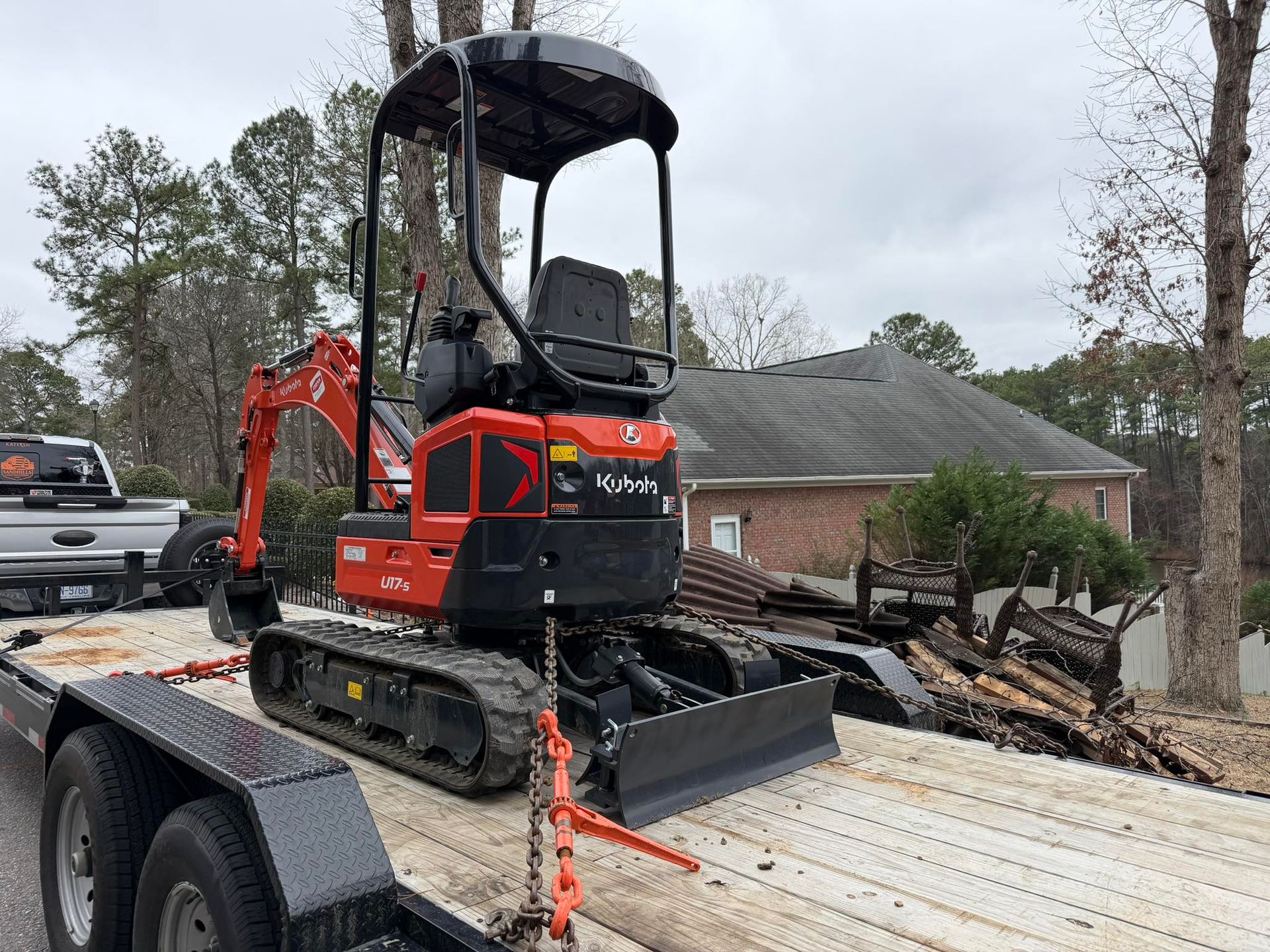
What Changes After Site Work Completes
Site preparation starts with boundary verification and utility marking, followed by clearing vegetation and removing stumps to depths that won't obstruct subsequent grading. Topsoil is stripped and stored for final landscaping, then operators excavate to depths specified for foundations, septic systems, or utility trenches. Material from excavation is redistributed across the site during grading or removed if unsuitable, and the building pad is shaped and compacted to support structural loads without settling.
After site preparation completes, the property has clear access for construction equipment, a level building pad with verified compaction and proper drainage slope, and excavated areas ready for footer placement or utility installation. Water moves predictably off the site instead of pooling, and the ground remains stable under equipment traffic because base material was compacted in controlled lifts. Builders can begin foundation work immediately without waiting for additional site adjustments.
Site preparation includes all preliminary earthwork needed before construction but does not include utility hookups, concrete placement, or final landscaping grades. The scope is adjusted based on whether the project involves residential construction, commercial development, or agricultural use, and whether the site includes challenging conditions such as steep slopes, high water tables, or rock layers requiring specialized equipment.
Questions Before Starting Your Project
Builders and property owners coordinating site preparation in Cameron typically ask about phase sequencing, soil management, and how weather affects timelines.
What phases are included in full site preparation?
Site preparation typically includes land clearing, topsoil removal and stockpiling, excavation for foundations and utilities, rough grading to establish drainage, and compaction of building pads or access roads.
How is topsoil managed during site preparation?
Topsoil is stripped from areas that will be graded or excavated and stockpiled on-site for redistribution during final landscaping, which preserves the nutrient-rich layer and reduces the need to import soil later.
What site conditions in Cameron require special preparation steps?
Properties with high water tables may need temporary dewatering during excavation, steep slopes require benching or terracing to prevent erosion, and sites with rock close to the surface need hydraulic breakers or blasting to reach required depths.
How does site preparation timing affect construction schedules?
Coordinating site prep phases reduces downtime between contractors—completing clearing, excavation, and grading in sequence allows foundation crews to start immediately rather than waiting for separate contractors to finish individual tasks.
What verifies that a site is ready for construction?
Compaction testing confirms that fill material and building pads meet density specifications, grade checks verify that drainage slopes match site plans, and final inspections ensure excavated areas are free of debris and at correct depths.
Sandhills Land Solutions coordinates with property owners and construction teams to maintain project schedules and deliver sites ready for building. Request a detailed estimate that outlines each preparation phase and timeline expectations for your specific project.