Land Shaped to Drain Correctly
Grading in Cameron for properties requiring stable foundations, controlled water runoff, and level building surfaces
Water pooling near foundations, driveways that channel runoff toward structures, and uneven yards that make landscaping difficult all indicate grading problems—land sloped incorrectly or left uneven after clearing or excavation. Sandhills Land Solutions provides precision grading services across Cameron and Moore County to establish proper slope, direct water away from buildings, and prepare land for foundations, driveways, and landscaping installations. The service uses modern equipment to move and level soil accurately, reducing the risk of standing water, erosion, and long-term structural issues caused by poor drainage.
Grading involves cutting high areas and filling low spots to create a consistent slope that directs water toward drainage points, compacting fill material to prevent settling, and shaping land to match site plans or engineering specifications. Operators use laser-guided or GPS equipment to verify slopes meet required grades—typically a minimum two percent slope away from structures to prevent water intrusion into foundations or crawl spaces.
Schedule a site evaluation to identify drainage concerns and determine grading requirements for your property layout.
Why Proper Slope Works for Water Management
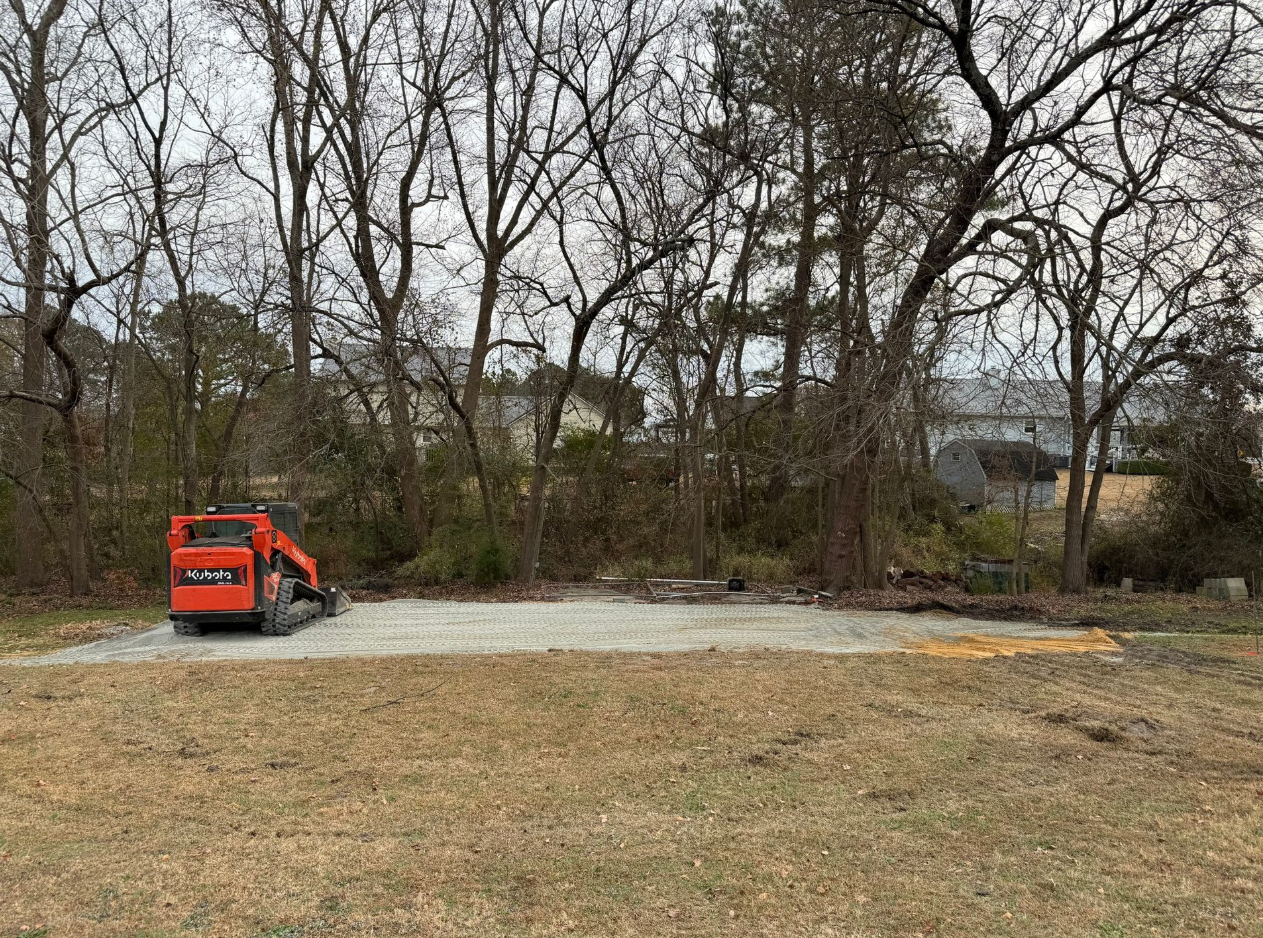
Grading begins with surveying existing elevations and marking final grade targets based on foundation heights, utility locations, and natural drainage patterns. Operators remove topsoil and set it aside for later redistribution, then shape subgrade using cuts and fills to meet slope specifications. Fill material is placed in layers and compacted to prevent future settling that would compromise drainage, and swales or berms are shaped where water needs to be channeled around structures or toward retention areas.
Once grading is complete, water moves predictably across the property without pooling or cutting channels through the soil, surfaces remain level where needed for patios or driveways, and building pads sit at elevations that keep water flowing away from foundations. The ground feels firm underfoot because compaction eliminated soft spots, and heavy rain no longer creates standing water or erosion patterns that indicate poor drainage.
Grading solutions are tailored based on property layout, soil type, and whether the site includes structures, hardscaping, or landscaping elements. The service prepares land for construction and planting but does not include topsoil placement, seeding, or final landscaping details—those steps follow after rough grading establishes proper drainage and slope.
Answers to Frequent Service Questions
Property owners in Cameron working with grading contractors often ask about slope requirements, equipment precision, and how grading affects other site work.
What slope is required to prevent water from reaching foundations?
Building codes typically require a minimum two percent slope away from foundations for at least ten feet, which translates to roughly two inches of drop per ten feet of horizontal distance to keep water moving away from structures.
How does grading equipment achieve accurate slopes?
Modern grading equipment uses laser receivers or GPS guidance systems that provide real-time feedback to operators, allowing them to cut or fill soil to within tenths of an inch of target elevations across large areas.
What soil conditions in Cameron affect grading results?
Sandy soils common in the Sandhills region require less compaction effort but may need stabilization if slopes are steep, while clay soils hold grades better but compact more slowly and may require moisture adjustments during dry periods.
When should grading be done during a construction project?
Rough grading occurs after excavation and before foundation work to establish drainage patterns and building pad elevations, with final grading completed after construction to blend landscaping areas and restore topsoil.
What causes graded land to settle unevenly after completion?
Settlement happens when fill material wasn't compacted adequately during placement, when organic material was left in the soil, or when water saturates uncompacted layers and causes them to compress under their own weight.
Sandhills Land Solutions uses precision equipment and applies knowledge of local soil behavior to deliver grading that performs long-term. Contact the office to discuss your project and receive a detailed grading plan based on site conditions.