
Boundaries That Define and Protect Property
Fencing in Cameron for residential yards, farmland perimeters, and commercial properties requiring security or boundary definition
A fence serves multiple functions depending on the property type—it contains livestock, secures equipment, marks legal boundaries, or creates privacy between neighboring homes. Sandhills Land Solutions installs fencing for residential and commercial properties across Cameron and the wider Sandhills area, where fence lines often cross varied terrain including wooded edges, open fields, and developed lots. Installation quality shows in how posts resist lean over time and how gates operate smoothly without sagging or binding.
The process begins with establishing the fence line, confirming property boundaries, and marking post locations based on terrain and the type of fence being installed. Posts get set in concrete or compacted aggregate depending on soil conditions and the forces the fence will face, such as wind load or livestock pressure. Panels, rails, or wire are then attached with hardware chosen for the material type, and gates receive reinforced framing to handle repeated opening and closing.
Schedule a property assessment to discuss fence type, layout, and site-specific considerations that affect installation.
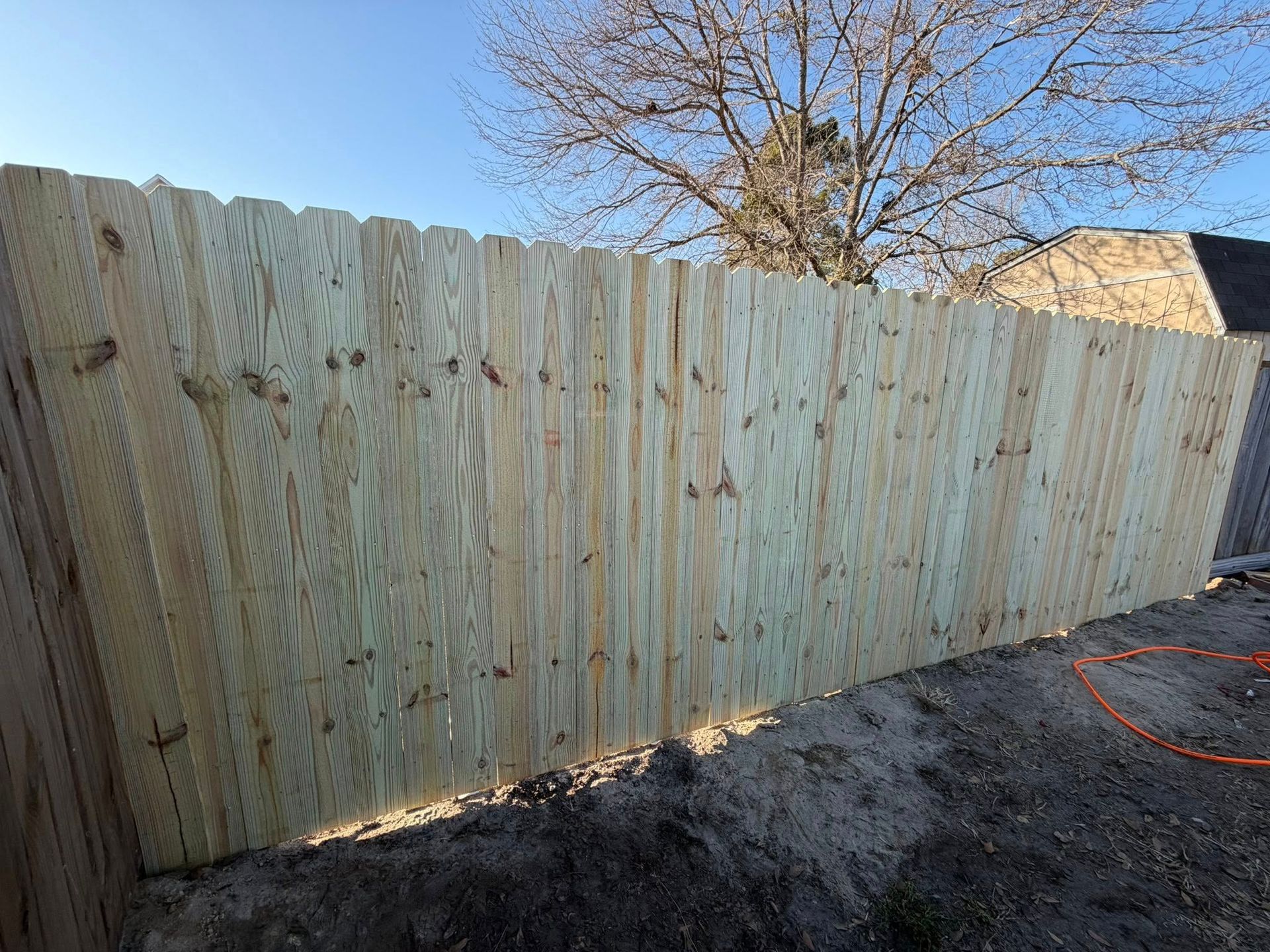
What Proper Fencing Requires
Post spacing and depth determine whether a fence stays upright and aligned. Corner and gate posts bear greater stress than line posts and require deeper setting and additional bracing. The crew measures and levels each post during installation, checking alignment before materials are secured, since corrections become difficult once concrete sets or panels are attached.
After installation, you'll see a fence that runs straight without dips or bends, with posts standing plumb and gates that swing freely without dragging on the ground. Panels or wire remain taut without sagging, and the fence maintains consistent height across uneven ground through proper grading or stepped sections. Hardware stays tight, and there are no gaps at ground level that allow animals to pass through or undermine the structure.
Different fence types suit different needs—privacy fences block sightlines and reduce noise, rail fences mark boundaries without obstructing views, and wire fences contain livestock while allowing airflow. Material choice affects maintenance requirements and lifespan. Treated wood resists rot but requires periodic inspection, while vinyl and metal options reduce upkeep but come with different cost structures and aesthetic qualities.
Answers to Frequent Service Questions
Property owners typically ask about materials, boundary considerations, and how terrain affects fence installation before moving forward with projects.
What determines how deep fence posts need to be set?
Post depth depends on fence height, material weight, and soil type. Taller fences and those facing wind exposure require deeper post holes, and sandy soils may need concrete setting where heavier soils can use compacted aggregate around posts.
How is the fence line established to avoid boundary disputes?
The crew follows property survey markers or coordinates provided by your surveyor to mark the fence location. If boundary lines aren't clearly documented, a survey is recommended before installation begins to prevent encroachment onto neighboring property.
What happens when the fence line crosses slopes or uneven terrain?
The fence either follows the ground contour with angled panels or steps down in level sections depending on the fence type and how steep the slope is. Gates require level sections, so the layout may adjust around planned gate locations to maintain proper operation.
When should fencing be installed relative to other property work?
Fencing typically comes after grading, clearing, or construction work that could damage the fence or require equipment to cross the property. In Cameron and surrounding areas, scheduling during drier months prevents equipment from rutting soft ground, though installation can proceed year-round when conditions allow.
Why do some gates sag or bind after installation?
Inadequate post reinforcement or hinges undersized for the gate weight cause sagging. Quality installations use diagonal bracing on gate frames and heavy-duty hinges rated for the gate's size, with posts set deeper and wider than line posts to handle the lateral force from repeated use.
Sandhills Land Solutions provides clear timelines and project estimates that reflect your property's specific layout and the fence type best suited to your needs. Set up a site visit to review your property and discuss material options.