Groundwork Built for Load and Longevity
Excavation in Cameron for residential builds, commercial developments, and properties requiring foundation-ready land
Sandhills Land Solutions provides excavation services across Cameron, North Carolina and surrounding Moore County communities for residential construction, commercial development, and property projects requiring precise site cuts, trenching, and land shaping. The service addresses properties where foundations, utilities, or structural elements require stable, properly prepared ground that can support long-term loads without settling or shifting. Operators work with knowledge of local soil composition—sandy layers common to the Sandhills region drain differently than clay deposits found in lower elevations, which affects cut depth, trench wall stability, and equipment selection.
Excavation work involves removing soil to specified depths and grades, creating trenches for utility lines, and shaping land to match engineering plans or drainage requirements. Equipment selection depends on soil type, access constraints, and whether the project involves basement excavation, septic system installation, or commercial pad preparation. Operators adjust cut angles and compaction methods based on soil moisture content and grain size to prevent sidewall collapse during trenching and minimize settlement after backfilling.
Schedule a site evaluation to review soil conditions and excavation requirements for your specific project.
What Proper Excavation Prevents Long-Term
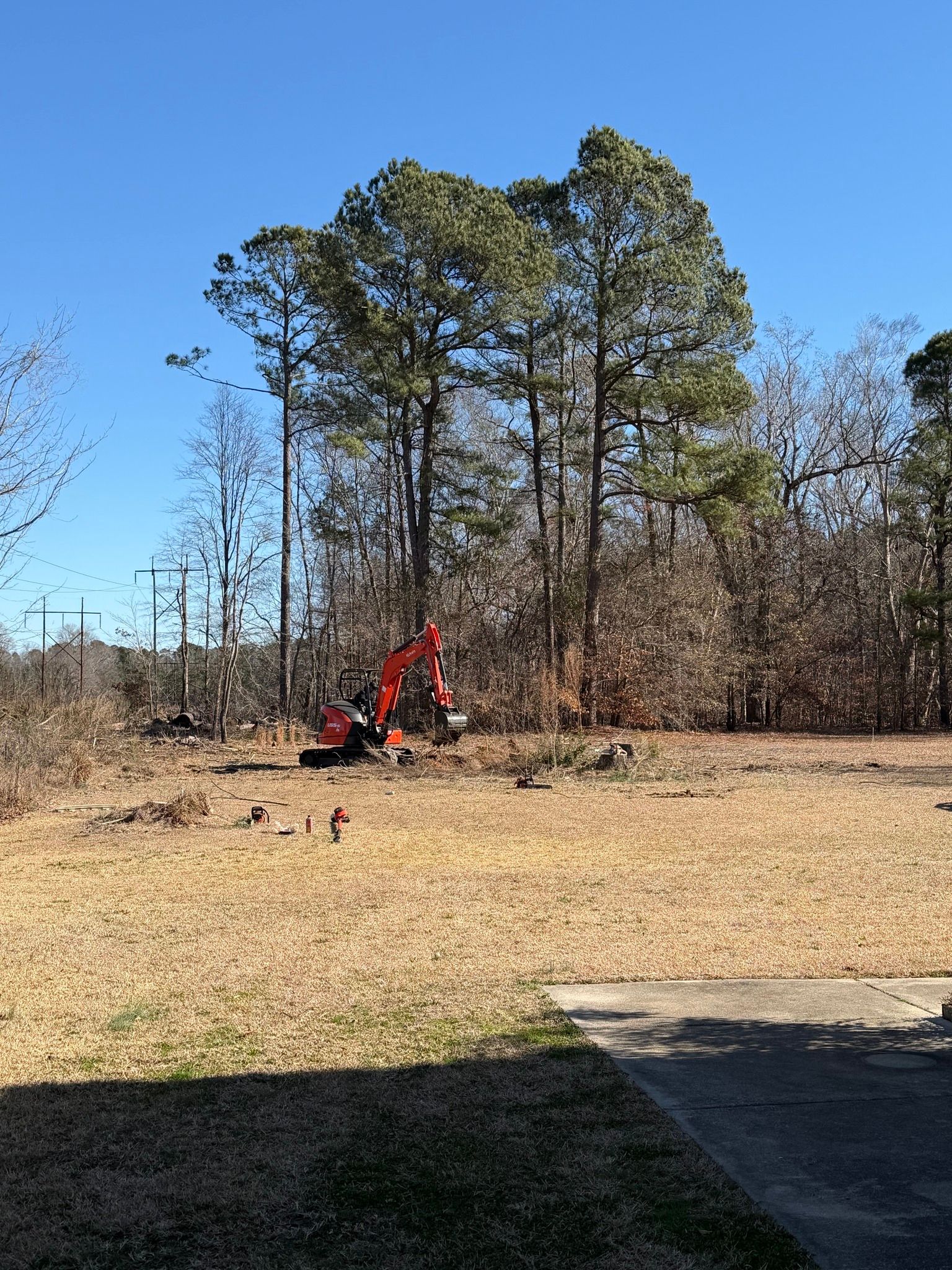
The excavation process begins with marking utility lines and establishing grade benchmarks using survey data or site plans. Operators remove topsoil separately from subsoil when the material will be reused for final grading, then excavate to depths that account for footer placement, frost lines, or utility specifications. Cut slopes are angled to prevent collapse, and trench boxes or shoring may be installed when working below certain depths in loose or saturated soil.
After excavation completes, you notice level bearing surfaces that match foundation dimensions, trenches running at consistent depths without dips or rises, and stable sidewalls that hold shape during footer placement or utility installation. Water no longer pools in low spots because the excavation accounts for final drainage slopes, and soil compaction readings meet engineering specifications before concrete or building materials arrive. The base remains stable under load because operators removed unstable soil layers and compacted fill material in controlled lifts.
Excavation depth and scope vary depending on foundation type, local frost depth requirements, and whether the project includes basement construction or slab-on-grade placement. The service includes site access preparation, material removal or stockpiling, and rough grading to drainage specifications, though it does not include final landscaping grades, utility hookups, or concrete placement.
Questions Before Starting Your Project
Property owners working with excavation contractors typically ask about soil conditions, equipment access, and how site preparation affects construction timelines.
What determines how deep excavation needs to go?
Excavation depth depends on foundation type, frost line requirements for your region, and whether utilities or drainage systems run beneath the structure. Footer depths typically extend below the frost line to prevent heaving during freeze-thaw cycles.
How does soil type in Cameron affect excavation work?
Sandy soils common in the Sandhills region drain quickly but require steeper trench angles to prevent sidewall slumping, while clay deposits hold shape better but may need dewatering pumps if groundwater is present.
What happens to excavated material?
Material is either stockpiled on-site for backfill and final grading, spread across other areas of the property if suitable, or removed if contaminated, oversized, or not needed for the project.
When should excavation be scheduled relative to other construction phases?
Excavation typically occurs after land clearing and rough grading but before foundation work begins, with timing coordinated to avoid delays caused by weather or utility installation schedules.
What site conditions slow down excavation work?
Saturated soil, unmarked utilities, rock layers requiring hydraulic breakers, and limited equipment access due to narrow driveways or overhead obstructions can extend timelines and require adjustments to the approach.
Sandhills Land Solutions works with property owners and builders to coordinate excavation phases and maintain project schedules. Request a detailed estimate based on your site layout and construction plans.