
Removing Hazards and Clearing Overgrowth
Tree Service in Cameron for properties managing hazardous trees, storm damage, or land clearing for development and maintenance projects
Trees growing too close to structures, leaning after root damage, or dead from disease create falling risks during storms common to the Sandhills region. Sandhills Land Solutions provides tree removal and maintenance services across Cameron and nearby areas, addressing hazardous trees and overgrowth that threaten buildings, power lines, or adjacent properties. Safe removal requires assessing lean direction, identifying weak limbs, and controlling how sections fall to avoid damage to surrounding structures or landscape features you're keeping.
The crew evaluates each tree to determine the removal method—some can be felled in one piece if space allows, while others require sectional dismantling from the top down using rigging to control each piece. Stumps are typically ground below grade unless you're planning construction that requires complete root removal. Debris gets chipped or hauled away, and the site is cleared of wood and branches after the tree is down.
Request an evaluation to assess trees on your property and identify removal priorities based on condition and location.
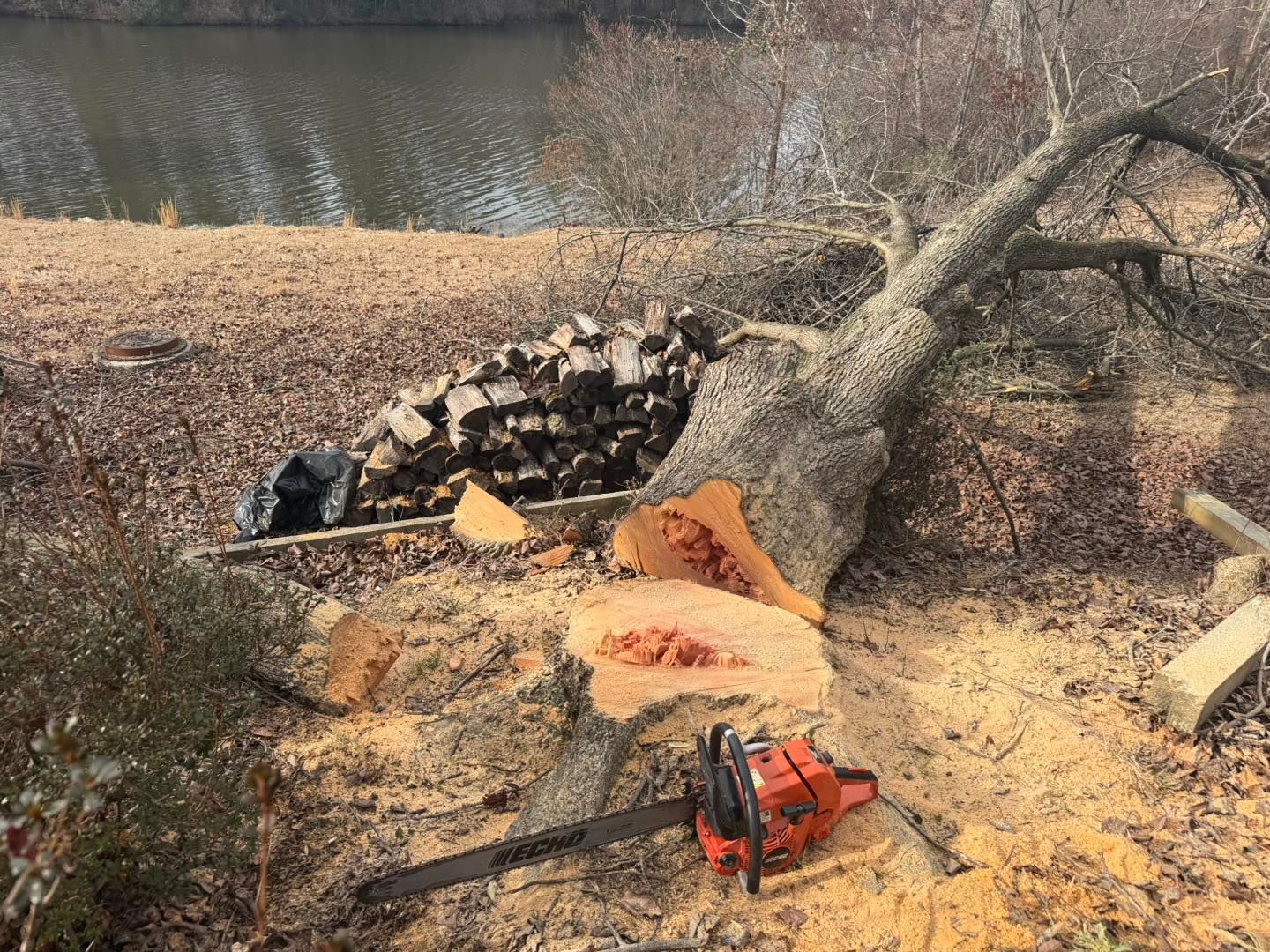
How Tree Removal Addresses Safety Concerns
Removal begins with clearing the area around the tree and establishing drop zones where sections will land. Rigging equipment gets set up for trees near structures or in tight spaces, allowing controlled lowering of limbs and trunk sections. The crew works from top to bottom, reducing the tree's height before addressing the main trunk, which minimizes the risk of uncontrolled movement during the process.
Once the tree is removed, you'll see the space it previously occupied cleared and the ground free of large debris. The stump sits flush with or below ground level if grinding was included, allowing grass to grow over the area or leaving the site ready for replanting. Nearby structures, fences, and landscape features remain undamaged, and the yard is cleaned of branches, sawdust, and wood chips generated during removal.
Tree removal often accompanies land clearing for construction, where multiple trees come down to prepare a site for building. This work includes removing stumps and roots that would interfere with grading or foundation placement. Ongoing maintenance services address trimming and pruning for trees you're keeping, reducing branch weight that could cause failure and removing deadwood before it falls on its own during high winds.
Questions Before Starting Your Project
Homeowners typically want to understand the removal process, equipment used, and how the property looks after trees are gone before scheduling work.
What signs indicate a tree has become hazardous?
Visible lean, dead branches in the canopy, cracks in the trunk, and root damage from construction or erosion all suggest a tree may fail. Trees that drop large limbs without warning or show fungal growth at the base often have internal decay that compromises structural integrity.
How are trees removed when they're close to buildings or power lines?
Sectional dismantling with rigging allows the crew to lower pieces in a controlled manner rather than letting them fall freely. Each section gets cut, secured with ropes, and guided to the ground away from structures. In Cameron and the surrounding area, proximity to homes and utilities often requires this approach rather than simple felling.
What happens to the wood and debris after a tree is removed?
Wood gets chipped on-site or hauled away depending on the volume and whether you want to keep any for firewood or other uses. Chips can be left as mulch if desired, or removed entirely along with branches and other debris to leave the site clean.
When is the best time to remove trees?
Dead or hazardous trees should come down as soon as possible to prevent storm damage. For healthy trees being removed for land clearing or property changes, scheduling during dormant seasons reduces stress on surrounding vegetation, though removal can proceed year-round when safety is the primary concern.
Why does stump grinding cost vary between trees?
Stump diameter and root spread determine how long grinding takes. Larger stumps require more time and equipment wear, and stumps in tight spaces where larger grinders can't access may need smaller equipment that works more slowly.
Sandhills Land Solutions handles tree removal with attention to site protection and thorough cleanup. Call (936) 494-9686 to schedule a property visit and discuss which trees need attention based on their condition and location.